Category: Product

  • What is an MVP in Product Development? A Guide for Founders

    What is an MVP in Product Development? A Guide for Founders

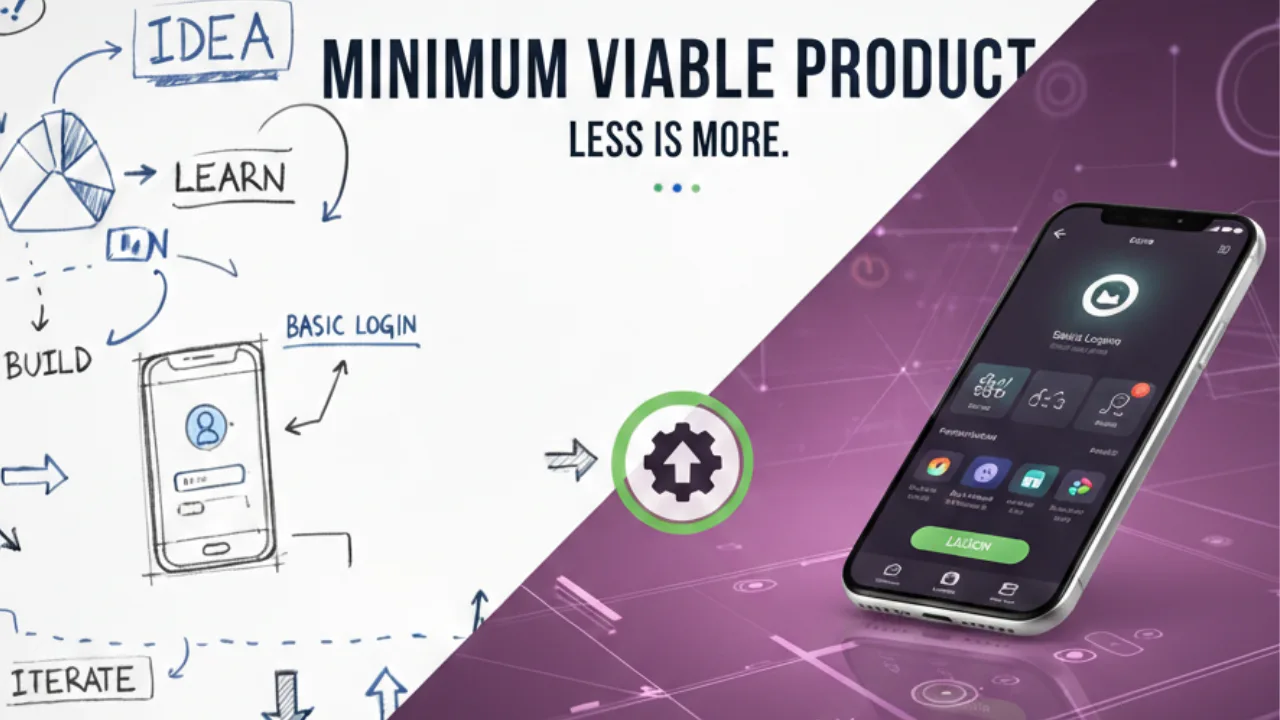
    An MVP, short for Minimum Viable Product, is the starting point of a new product idea. It is built to answer one main question. Will people use this product and find value in it? Instead of building everything at once, founders release a focused version, learn from users, then improve step by step. That approach keeps effort in check and keeps learning fast.

    A good way to look at it is this:

    • It solves one real problem
    • It works from day one
    • It invites feedback from real users
    • It leaves extra ideas for later

    For example, let’s say a founder is building a food delivery app for busy workers in Lagos. The MVP does not need live rider tracking, loyalty points, and ten payment options. The MVP can start with:

    • A simple menu
    • Order placement
    • One payment option
    • Basic delivery confirmation

    If users place orders and return the next day, the MVP has done its job. From there, the product development MVP grows based on real use.

    This is why the MVP’s meaning goes beyond speed. It helps founders learn early, adjust quickly, and avoid building products nobody asked for.

    What an MVP Is Not

    At this point, it helps to clear some common mix-ups. Many founders hear “MVP” and imagine something rushed or incomplete. That idea causes confusion and wrong decisions early on. So let us clarify this:

    An MVP Is Not a Half-Baked Product

    An MVP is not a product full of bugs or broken flows. It is not something you release and hope people manage their way through. No. A proper minimum viable product works as intended. Users can sign up, use the core features, and complete the main action without stress.

    A half-baked product looks like this:

    • Features that do not work properly
    • Screens that confuse users
    • No clear purpose

    An MVP looks different:

    • One clear problem solved well
    • Clean and usable flow
    • Clear next steps for improvement

    The goal is learning from user interaction on a well-built app, not to rushing to go live without consideration for quality.

    An MVP Is Not Just a Prototype or Mockup

    Another common mix-up is prototype vs MVP. A prototype shows how a product might look or flow. It is useful for early talks and idea testing. Still, it cannot replace an MVP.

    A prototype:

    • Is often just a design
    • Is used for internal review
    • Cannot serve real users

    An MVP:

    • Is a working product
    • Is used by real people
    • Collects real feedback

    If users cannot interact with it, it is not an MVP.

    An MVP Is Not the Final Version of Your Product

    An MVP is not the end goal. It is the starting point. Many founders fall into the trap of polishing the first version till it’s full of all their envisioned features. That slows learning and finding Product Market Fit.

    A good product grows over time. The MVP simply opens the door. Features, design changes, and new ideas should come directly from user feedback.

    This clarity helps founders plan better and set the right expectations with their teams.

    Why MVPs are Important in Startup Product Development

    There are several reasons MVPs are such a cornerstone of product development. We’ll explore a few of those.

    Validating Your Idea With Real Users

    Ideas often make a lot of sense in the founder’s and the development team’s head. Real users think differently. An MVP puts the idea in front of people who matter most; your users.

    With a product development MVP, founders can:

    • See how users interact with their app
    • Learn what users ignore
    • Confirm what users return for

    Feedback from real use beats opinions every time.

    Saving Time and Development Costs

    Building everything at once wastes effort. Many features never get used. An MVP keeps focus tight and spending controlled.

    Founders save time by:

    • Building fewer features
    • Fixing real problems early
    • Avoiding costly rebuilds

    Money stays where it should be. On growth, not repairs.

    Learning Before You Scale

    If you scale a product without learning first, you will eventually learn hard lessons. An MVP creates space to test, adjust, and move forward with confidence.

    This phase helps founders:

    • Spot weak assumptions
    • Improve based on usage
    • Decide what deserves investment

    Choosing an MVP shows clear thinking and respect for resources. That mindset separates thoughtful founders from unwise ones.

    When Does a Startup Actually Need an MVP?

    Not every idea needs a full product from the start. An MVP is most useful when the goal is to test assumptions and learn quickly without spending too much. Knowing the right moment to build one can save time and resources.

    Early-Stage Founders With an Idea

    If you have a new product idea but nothing built yet, an MVP helps you check if people actually want it. It is the fastest way to see if your solution solves a real problem. At this stage, focus on:

    • Identifying the main problem your product solves
    • Offering a simple solution that users can try
    • Collecting early feedback to guide development

    This approach prevents spending months building a product nobody needs.

    Teams Building a New Feature or Product Line

    Organizations and businesses with existing products may want to add a new feature. Instead of launching it fully, an MVP allows the team to:

    • Test the feature with a small group of users
    • Understand if the feature adds value
    • Decide whether it deserves full development

    This prevents over-investment in features that do not improve the user experience.

    Startups Preparing for Funding or Market Entry

    Investors and early adopters respond better to a product they can use, not just a concept. An MVP helps startups:

    • Show that the idea works in practice
    • Gather usage data to support funding requests
    • Refine the product before wider release

    By starting with an MVP, startups can enter the market with confidence and real user evidence.

    What Happens After an MVP Is Launched?

    Launching an MVP is not the end of the work. It is the start of learning. The product now faces real users, and their feedback becomes the guide for the next steps. How you respond to this phase often determines whether the product grows or stalls.

    Gathering User Feedback

    The first step after launch is to listen carefully to users. This goes beyond comments or reviews. It involves observing how people interact with the product and noting where they succeed or struggle.

    Key ways to gather feedback include:

    • Direct interviews or surveys with early users
    • Tracking usage patterns within the product
    • Monitoring repeat engagement and retention
    • Collecting feature requests and suggestions

    The goal is to separate assumptions from reality. Users will show what works and what needs attention, and that information is more valuable than any idea on paper.

    Iterating Based on Data

    Once feedback comes in, the next step is iteration. This means making improvements and adjustments using real data.

    Iteration focuses on:

    • Fixing the parts of the MVP that cause confusion or issues
    • Improving user flows based on behavior
    • Adding small features that meet real needs
    • Removing anything that does not help users

    Regular iteration keeps the product aligned with user expectations while keeping development focused and cost-effective.

    Deciding Whether to Scale, Pivot, or Pause

    After gathering feedback and iterating, founders must decide the future direction. The options are:

    1. Scale: The product is working and ready for more users or markets.
    2. Pivot: The product works in some ways but needs a new approach or target audience.
    3. Pause: The idea may not have strong traction yet, and more research or validation is required.

    These decisions are easier when guided by evidence. A clear plan after the MVP prevents wasted effort and helps the product grow steadily.

    When Should You Involve a Product Team or Development Partner?

    Knowing when to bring in a skilled product team can save time and prevent mistakes. The right timing ensures that the MVP is built efficiently and positioned for success.

    During Idea Validation and Scoping

    The product team helps to define the core problem, target users, and essential features. They can guide what to include in the MVP and what to leave for later.

    Benefits of early involvement:

    • Clear feature prioritization
    • Better planning and timelines
    • Reduced the risk of building irrelevant features

    When Technical Decisions Start to Matter

    Once the idea is clear, technical choices become important. Decisions like which platform to use, database setup, and integrations affect long-term growth. A product team ensures that these choices match your goals without over-complicating the MVP.

    When You Want to Avoid Rebuilding Later

    Building without guidance can lead to redoing work or starting over. A product team helps create a foundation that can grow naturally. They plan the structure so future updates and new features can fit in without breaking what already works.

    By involving experts at the right stages, startups make the most of their resources and avoid common pitfalls.

    Common Questions Founders Ask About MVPs

    Many founders still have questions about MVPs. These are the questions that come up most often, and getting clear answers helps you plan and move forward.

    What is the main goal of an MVP?

    The main goal of an MVP is to test a product idea quickly with real users. It is built to see if people actually need or want the solution. Success is measured by learning, not by how many features it has.

    How long does it take to build an MVP?

    The timeline for an MVP depends on the complexity of the product and the focus of the core features. Simple MVPs can be ready in a few weeks, while more complex products may take a few months.

    How much does an MVP usually cost?

    The cost of an MVP varies widely depending on the features, platform, and team involved. A lean MVP focuses on essential functionality, which keeps costs lower than a full product.

    Can an MVP be used to raise funding?

    Yes, an MVP can be a powerful tool to show investors that your idea works in practice. It provides proof that users are engaging with the product, which makes funding discussions more concrete.

    How Mactavis Digital Helps Startups Build the Right MVP

    Building the right MVP requires planning, focus, and technical skill. Mactavis Digital supports startups at every stage of the process without overcomplicating it.

    Services include:

    • Product discovery: Identify the core problem, target user, and main features
    • MVP scoping: Decide what belongs in the first version and what can wait
    • Lean development: Build a usable, focused product quickly and efficiently
    • Post-launch support: Collect feedback, improve the product, and guide the next steps

    Ready to Build Your MVP?

    If you are ready to turn your idea into a product that users can actually use, Mactavis Digital can help. Speak to our product team, book a discovery session, and discuss your MVP idea with us. We guide startups step by step, making sure your first version solves the right problem and sets you up to grow.

  • How to Validate Your Digital Product Idea Before Development

    How to Validate Your Digital Product Idea Before Development

    Let’s say you have this brilliant product idea, and you’re eager to bring it to life. But how do you know if it’s really worth building? Before you invest time, money, and energy, you need to validate your digital product idea. Many founders and business owners make the mistake of skipping this crucial step. They rush into development only to find out months later that their product does not have a market or customers willing to pay for it.

    A good idea on paper does not always translate into demand in the real world. Without proper validation, you risk losing resources and facing disappointment.

    In this guide, you will find practical and affordable ways to check if your product idea has a chance of success before you start building. These methods will help you gather useful information and avoid costly mistakes.

    Why Product Validation Matters More Than You Think

    Skipping the step to validate your digital product idea can cause real problems. Many founders dive straight into building without checking if people actually want their product. This often leads to wasted resources that could have been spent better elsewhere. The team also gets tired and frustrated after working hard on a product that does not fit the market. When there is no clear product-market fit, the product struggles to survive.

    Taking time to validate your digital product idea helps you discover important things. You find out if there is real demand for your product. You also identify who exactly your customers are and confirm that your product solves a problem they care about. This makes your development efforts focused and effective.

    Identify Who Has the Problem and Who Will Pay to Solve It

    Knowing who has the problem is just as important as knowing the problem itself. To properly validate your digital product idea, you need to define your target audience clearly. This means understanding the people who actually face the challenge your product aims to fix.

    Start by creating a simple user persona. Think about their age, what role they play in their work or life, where they live, the tools they use daily, and the frustrations they often talk about. This persona is like a sketch that guides your product decisions and marketing efforts. The clearer this picture, the easier it will be to reach the right people.

    To gather this information, you can use tools that are easy to access. Google Trends helps you see what people are searching for and whether interest is growing. Facebook groups give you a chance to listen to real conversations from your potential audience. You can also create quick surveys using platforms like Typeform to ask direct questions and gather useful feedback.

    By knowing exactly who you are building for, you reduce the risk of making something that no one wants or will pay for.

    Test the Concept with Simple Experiments

    You do not need to build the full product to validate your digital product idea. Sometimes, testing the waters with small experiments can give you enough insight to decide whether to move forward or adjust your plan.

    One easy way is to create a landing page that explains your product idea and invites visitors to leave their email if they are interested. This approach helps you measure real interest without spending too much time or money.

    Another approach is to run a small paid ad campaign. For example, you can spend a few dollars to test how many people click on your ad and sign up or express interest. This shows if your idea has traction and if the audience you defined earlier responds positively.

    You can also create a clickable prototype using tools like Figma or build a simple version of your app using AI platforms like Replit and Lovable. This lets you show how your product might work in a simple way, and you can ask for honest feedback from potential users. This step is very useful because it gives people something tangible to react to instead of just an idea.

    Talk to Potential Users

    Just a few honest conversations can open your eyes to what your potential customers truly want and need. This step is essential if you want to validate your digital product idea.

    When you speak with users, focus on a few key questions that reveal their pain points and willingness to pay to solve them. Ask them what they currently use to solve the problem you want to address. Find out what frustrates them about those solutions. Then, check if they would pay for something better.

    These questions help you discover whether your idea is worth pursuing and where you might improve it. Sometimes people surprise you with answers that no survey could capture.

    By talking directly to potential users, you gather insights that bring your product idea closer to reality and improve your chances of success.

    Analyze Your Results and Make a Call

    After collecting feedback and testing your ideas, the next step is to sit down and look carefully at what you’ve gathered. This is where you make sense of everything to decide if your product idea has a real chance. To validate your digital product idea, pay close attention to three things.

    First, do people understand your idea right away? If they get it quickly, it means you have a clear message and your product solves a real problem. If you have to explain it over and over, you might need to rethink how you present it.

    Second, are they ready to pay or at least show some kind of commitment? If no one is willing to spend money or make a promise, that is a strong sign your idea needs work. Money talks, and commitment shows real interest.

    Third, watch out for surprises. Sometimes, unexpected comments or insights can reveal new angles or even better solutions. These surprises could be your golden ticket if you pay attention.

    After reviewing all this, it’s perfectly okay to change your direction or pause the project. Better to adjust now than launch something that doesn’t fit the market. Making a smart call at this stage can save time, money, and frustration.

    What a Validated Idea Looks Like

    When you’ve taken the time to validate your digital product idea, you will see some clear signs that you are on the right path. Here is a simple checklist to help you spot a validated idea.

    First, you know the problem well and understand who your audience is. You’re not guessing anymore; you have a solid grasp of who needs your solution.

    Next, you have collected real data. This means more than just opinions or guesses. You gathered information from actual people through tests, interviews, or sign-ups.

    Another sign is that people are taking action. Maybe they signed up on your waiting list, shared your page with friends, or asked to be notified when your product launches. These actions show interest and excitement.

    Finally, you have enough clarity and confidence to start building your minimum viable product (MVP). You know what features matter most and what to focus on first.

    If you need help to build your MVP, talk to us at Mactavis. We can guide you through the process so your idea moves from concepts to something real people can use.

    Conclusion

    Most ideas sound fine in your head, but a solid product idea is one that people actually want, need, and are ready to pay for. The stage of validation helps you spot any faults early on, so you can focus your energy in the right places and create a product that stands a chance of success.

    If you’re working on an idea and feel unsure about the next step, Mactavis Digital can help. From research to designing and developing your MVP, we work alongside you to bring your validated digital product idea to life. Book a free consultation today and take the first step towards turning your idea into reality.

  • How To Get Your Start-up Running Without A Technical Co-founder

    How To Get Your Start-up Running Without A Technical Co-founder

    The primary objective when starting a company is to build the brand and expand. Unfortunately, this process takes time. This is because growth is a continuous process that calls for diligence, endurance, and commitment. This paper will examine the steps to help you grow a start-up. 

    It is worth highlighting that while a startup can operate without a technical partner, subsequently, it becomes necessary to incorporate the knowledge of such an expert or experts. In the case of BuyLetLive, Mactavis Digital established an online presence for the company to increase its visibility.

    Seeing goods and services on social platforms gives us the impression that establishing a company must be exciting and that everyone can be successful. However, what we see as a final product is only the very beginning. The entrepreneurial process is long and requires close attention to every aspect. Before we go into the steps to help you grow a start-up, here a few boxes to tick:

    Discover Ideas

    To be referred to as an entrepreneur, you must have created the idea. You might develop a construct that has never been thought of before or an enhancement of an existing idea when you think about the potential and prospects around you. Your concept must consider all the options and chances accessible to develop and provide value to your customers.

    Develop a Business Plan

    As a startup, you can do forecasting and weigh the advantages and disadvantages. These concepts are now analyzed through creative thinking and then put into context. Remember, your plan should outline all the goals, benchmarks, and intended audience. It is also advisable to conduct all necessary market research to determine your target market. Find out if there is an increased demand for your goods or services. Lastly, make a list of all the challenges you’ll face on the journey and a plan B for them. 

    Finding Resources

    At this stage, you assess your capital, human and other financial resources. Also, depending on your needs, employ the most qualified and suitable people for your brand. The top is the best place to begin. If you are to be the CEO, then the following are necessary for a start-up; chief operating officer, product manager, and chief marketing officer. 

    To raise funds for your startup if it’s a small business, find possible investors, apply for loans, or take loans from family or friends.

    Implementation of Business

    You are now responsible for managing your business daily to satisfy the demands and needs of your clients. By their respective tasks, duties are designated to every member of the selected team. At this point, everything revolves around taking action. 

    If there is a product, creating a prototype would be a fantastic idea. This will help to determine whether your product is ready to hit the market and seek out opinions from those around you.

    Growth

    You are currently considering the potential for expansion and progress. Here, you contrast present growth with anticipated growth and establish meaningful choices on the results. 

    You can think about things like: 

    • What more goods or services can I offer? 
    • Should I move my business to other cities? 
    • What are my immediate and long-term goals? 
    • Should I increase my research and development spending? 

    Although the growth of your business may be gradual at first, persevere because your first objective is survival.

    The above questions demonstrate that being an entrepreneur involves far more than just starting a business. All steps must be completed before launching a startup. You will learn various skills as you go through these stages if you choose the entrepreneurial path. Know that starting a thriving business is a marathon, not a sprint! Below are steps to help you grow a start-up;

    STEPS TO HELP YOU GROW A START-UP 

    It is impossible to outperform others in your field or find quick success without using technology. There are, however, tried-and-true methods for assisting you in hitting growth targets that might propel a company to victory. 

    It takes time, money, and effort to develop a company concept from scratch. You must struggle against the forces of failure and recognize when action is needed and take it. The steps outlined below will aid in the expansion of your firm.

    Be Adaptable

    The capacity to quickly alter paths in reaction to market developments is one quality that many prosperous entrepreneurs share. You’ll experience faster growth if you adopt an agile development methodology for your business and product. You may try several company strategies and determine what works best if you allow yourself to modify and adapt rapidly. It gives you the space to make mistakes, get back up, and keep moving forward.

    Focus On Your Customer Experience

    Your company’s success depends on how your customers perceive it. If you provide high-quality services and goods, people will instantly appreciate you on social media; if you make a mistake, they’ll spread the word even faster. Making your present and potential consumers satisfied with their experience is essential for rapid growth. 

    Small firms are more agile and frequently better able to recognize, foresee, and react to the requirements of their customers than giant corporations. The most successful small firms use this advantage by launching new and cutting-edge goods and services faster and cultivating enduring client relationships. 

    Invest In Yourself

    Usually, startups have thin profit margins or none at all. So any profit generated should be invested in expanding your firm. The capacity of a startup to reinvest in itself accelerates growth. It’s crucial to ensure you’re reinvesting all initial profits into the business. While it may be tempting to keep all your gains for yourself, it’s wiser to invest in the expansion of your company so you can subsequently enjoy tremendous rewards. Decide which areas of your company require additional attention: Do you need to increase your workforce, increase your marketing budget, or all three, for instance? Whenever you identify those vital areas that need improvements, fund them.

    Boost your Customer Service

    Concentrating on delivering exceptional customer service is another fantastic way to expand your company. Customers are more inclined to recommend your company to their followers when you surpass their expectations. 

    When you go above and beyond, like giving discounts if a customer has a bad experience or checking in to be sure a customer was delighted with your goods or service, you gain prestige for excellent customer service. Be careful to provide your customer support team with the best business phone system.

    Attend Networking Events.

    Attending networking events enables you to meet like-minded people, many of whom have distinctive viewpoints and ideas that might support the expansion of your company. These events can result in connections and partnerships that can be useful for many years.

    ADVANTAGES OF RUNNING A START-UP WITHOUT A TECHNICAL CO-FOUNDER 

    Minimizes Cost

    Having a technical co-founder to help run your start-up is not an easy fit, particularly for small businesses, because it requires payments for services rendered. Most small businesses prefer to build their brand with little or no technical assistance merely to save funds.

    Limits Distortion of Ideas

    Founders develop a business idea and follow it up from inception to conclusion. However, the invited technical partner is unlikely to become obsessed with the concept like the founders are. Being a middleman between the founder and the team, the technical co-founder is more likely to overlook some crucial details, which will skew the outcome. It’s not a clever idea to build your company with a partner who is not on board with your vision, can’t deliver what they promise, or won’t stand by you through the tough times.

    DOWNSIDES OF RUNNING A STARTUP WITHOUT A TECHNICAL CO-FOUNDER

    Various startups that do not work or partner with technical experts for their businesses tend to witness slow growth processes and operational malfunctions. Instead of companies advancing speedily in their web activities, they lag due to technical problems and hurdles. There are various disadvantages to running a business without a technical partner, and these include

    Time Mismanagement

    A great deal of time is wasted on research due to the lack of professionals to do the work. Meanwhile, an expert can quickly assist you in identifying the best option for your startup because they’re well-versed in the latest technologies and are acquainted with how they operate

    Exposure to Cyberattacks 

    Any business can fall victim to viruses and malware without the knowledge of a technical expert. With the rise in cyber attacks, a startup with no tech partner is at risk of loss and eventual collapse. Proper access to technical support or assistance for your startup will ensure security and safety for your business data and internal systems.

    Inefficiency in the Marketing Space

    One of the most expensive errors you can make today is using a digital marketing plan that is inefficient or unproductive. Which is better for advertising: through browsers or social media, or both? How many ads should you run at a time? Spending time, incorrect web analytics and spending money on digital advertising wrongly remain part that destroys a business so startups must be attentive to these factors. Furthermore, we cannot emphasize this enough: you need to have a professional on your side.

    Even though it can be challenging, starting a business can be very rewarding. Having a fantastic concept and attempting to sell it presents difficulties, including securing funding, hiring staff, marketing, handling legal matters, and controlling funds. But bear in mind that these steps to help you achieve a successful start-up might result in a more fulfilling career and the chance to make a lasting impression.

    Mactavis Digital has experience working with start-ups. We have worked on projects at all phases, from those that were just getting started to those that needed to increase their turnover and reach. With our assistance, you won’t have to figure out “how to select a good technique for a startup” or “steps to help you grow a start-up.”, as we can handle any tasks you wish to delegate to a technical partner. We understand the needs of startups, as a result, provide our clients with more value.


  • 5 Reasons Why You Should Invest In Custom Software Development As A Startup In 2023

    5 Reasons Why You Should Invest In Custom Software Development As A Startup In 2023

    Custom software allows a client’s preferences to be met during development. This flexibility, which is beneficial to startups, may not be available when using Off-the-shelf or readily-made software.  That is why we have put together 5 reasons to invest in custom software as a startup in 2023.

    Although there are disadvantages of custom software, such as time consumption and resources needed. Compared to other off-the-shelf software, it allows for critical functions like customer management, inventory management, content management, SEO, and so on. A properly developed custom software will stand the test of time and grow visibility better and easier than Off-the-shelf software. 

    Off-the-shelf software may seem like an easy option as it guarantees high ROI, but will it benefit your business in the long run? Mactavis understands the economic constraints of startups and, so provides quality custom software based on your budget.

    Are you a Startup looking to unlock your potential and maximize your resources? Let’s talk about how investing in custom software can help you achieve that.

    5 REASONS TO INVEST IN CUSTOM SOFTWARE AS A STARTUP IN 2023

    Efficiency & Scalabilty

    Choosing custom software allows the maximum use of the development process and a wide range of capabilities. The software should be the right representation of your brand’s image and should cater to the needs of your target audience.

    With the independence of self-managing your product, you can position it for a great ROI in the long run and avoid dealing with software vendors. Your product is developed to address your unique needs as you grow.

    Easy Software Integration

    As the business grows, its software needs also grow. Custom software development allows for the easy integration of new software; changes can be applied and functionalities are tweaked easily because the software was built for your business from scratch. 

    Custom software can easily fit within any business’s software ecosystem, while commercial-off-the-shelf software may lead to errors during the integration process. What this does is slow down productivity and, most times, consumes time and resources as the project is rebuilt from scratch. Imagine experiencing an issue and then realizing it involves more than one service provider with different structures and development techniques.

    Personalised User Experience

    One of the important points of developing a product is to create a user experience that is unique to the needs of the target audience. Each target audience has their expectation. Building trust as a Startup is just as sacrosanct as making a profit. How then do you build trust?

    Investing in custom software allows you to create solutions and experiences that will attract and retain your target audience, which leads to them trusting your brand. Achieving a great user experience is however a process of testing and implementing changes based on user patterns. These changes can only be done easily on custom software. 

    Reliability & Control

    Purchasing an off-the-shelf means you are solely depending on the company that developed it. They control the terms and conditions for use, the pricing, and even most functionalities if not all. 

    What happens if that company goes out of business or shuts down? You would be left in a devastating situation of developing from scratch in a short period or finding a new service provider. 

    This is not the case with custom software, although you must consider the cost of maintaining the server. Custom software gives you control over your product and how long you want to use it.

    No Complexities

    The complex nature of software can sometimes become overwhelming, coupled with all that has to be put in place as a startup. Putting together your brand identity, USP and a standard team capable of ensuring productivity and longevity. It is not advisable to purchase off-the-shelf software because when you do, you end up paying for something that you do not need at the time. 

    Therefore, when you use custom software, you can determine what features are created now and the ones for later. 

    Whether you own a B2B, B2C, Startup, or SMB, you need proper custom-developed software to give your brand that edge. Mactavis is an outstanding Software Development Company helping businesses position for success. Our team of experienced developers delivers the best and has fulfilled so many business dreams.