Blog

  • Top Web Design Trends To look Out For In 2025

    Top Web Design Trends To look Out For In 2025

    2025 is bringing with it a wave of groundbreaking web design trends that aren’t just about aesthetics—they’re about creating meaningful connections between brands and their audiences. Whether it’s the allure of parallax scrolling or the functionality of AI-powered chatbots, these trends can transform your website into a powerful business tool.

    So, what does the future hold, and how can your business leverage these innovations to thrive? Let’s dive into the top web design trends that will define 2025 and discover how embracing them can elevate your online presence, captivate your audience, and drive results.

    Top Web Design Trends for 2025: User Experience Innovations

    A website’s success hinges on its ability to engage, inspire, and satisfy users. In 2025, user experience (UX) will take center stage, with innovations designed to captivate audiences and streamline interactions. Here’s how forward-thinking businesses are enhancing their digital spaces with cutting-edge trends:

    1. Parallax Scrolling: Bringing Depth to Life

    Imagine scrolling through a website that feels alive. Backgrounds move at a different pace than the foreground, creating an illusion of depth and immersion. Parallax scrolling transforms static web pages into dynamic storytelling canvases, pulling users into a journey they won’t want to leave. This technique encourages visitors to linger longer, explore deeper, and personally connect with your content.

    2. Chatbots with AI: Your 24/7 Digital Concierge

    AI-powered chatbots are digital assistants that can respond to inquiries, offer suggestions, and fix problems instantly. These chatbots learn from user interactions to provide more personalized responses, increasing user satisfaction and trust while freeing up your human team to work on more complex tasks.

    3. Voice User Interfaces (VUIs): Navigating Without Clicks

    Voice User Interfaces are changing how people interact with websites as a result of the proliferation of voice-enabled devices. Imagine consumers using voice commands to look for products, schedule appointments, or check out without doing any work. VUIs make interactions quicker, more intuitive, and highly user-friendly to meet the increased need for convenience.

    4. Accessibility First Design: Websites for Everyone

    It is essential to be inclusive. Everyone can utilize your website to its full potential, including those with impairments if you prioritize accessibility in your design. With features like screen reader compatibility, adjustable color contrasts, and easy navigation, these WCAG-compliant designs show your dedication to diversity while reaching a wider audience.

    5. Gamification: Turning Engagement Into Play

    What if visiting your website felt like a game? With gamification, you can introduce elements like progress bars, achievement badges, or interactive quizzes that make user interactions fun and rewarding. By blending entertainment with engagement, gamified experiences not only captivate users but also inspire them to take action, like signing up, sharing, or purchasing.

    6. Monochromatic Websites: The Elegance of Simplicity

    Less can truly be more. Monochromatic websites use a single color palette in varying shades and tones, creating a cohesive and polished look. This design approach exudes sophistication, making it ideal for brands aiming to convey professionalism and style. Whether it’s a soft pastel theme or bold blacks and whites, monochromatic designs are versatile, timeless, and undeniably chic.

    7. Gradient Color Schemes: Adding Depth and Energy

    Gone are the days of flat, static visuals. Gradient color schemes infuse life into designs by blending vibrant hues seamlessly. These color transitions create a sense of movement and dimension, guiding users’ eyes naturally across the page. Perfect for backgrounds, buttons, and overlays, gradients breathe energy into websites, making them feel modern and dynamic.

    8. Modern Minimalism: Where Clarity Meets Impact

    Clutter-free is the new creative. Modern minimalism focuses on clean layouts, ample white space, and bold typography. By stripping away unnecessary elements, this trend emphasizes the essentials, ensuring users focus on what matters most—your content. In addition to being visually pleasing, minimalist designs improve usefulness by making navigating simple and interesting.

    9. Oversized Typography: Making Bold Statements

    Why whisper when you can shout? Oversized typography uses large, eye-catching fonts as design elements to immediately grab attention. Whether it’s a striking headline or a powerful call to action, this trend ensures your message resonates. Paired with sleek visuals, oversized text transforms simple words into impactful visual experiences.

    10. Immersive Full-Screen Videos: Storytelling in Motion

    Full-screen autoplay videos as website backgrounds immerse users in your brand’s narrative from the moment they arrive. Whether showcasing a product, service, or company culture, these videos captivate attention and create an emotional connection, all while keeping users engaged.

    11. Augmented Reality (AR): Try Before You Buy

    Imagine letting your customers visualize your products in their own environment before making a purchase. Augmented Reality brings this vision to life by overlaying digital elements in real-world settings. Whether it’s trying out furniture in their living room or seeing how a pair of glasses fits their face, AR adds an interactive layer that boosts confidence and drives conversions.

    12. Web3 and Blockchain Integration: Building Trust Through Innovation

    The rise of Web3 is redefining online interactions with blockchain technology at its core. For websites, this means enhanced security, transparent transactions, and exciting new functionalities like NFTs (non-fungible tokens) for digital ownership. By integrating Web3 elements, businesses can position themselves as forward-thinking and trustworthy in an increasingly decentralized world.

    13. Interactive 3D Elements: Adding a Touch of Realism

    Static visuals are making way for interactive 3D elements that engage users like never before. These hyper-realistic graphics allow users to rotate, zoom, and explore products in detail, creating a hands-on experience. Whether it’s a 3D model of a product or an immersive virtual tour, this trend ensures your website stands out as memorable and innovative.

    14. Progressive Web Apps (PWAs): Speed Meets Seamlessness

    Blurring the lines between websites and apps, Progressive Web Apps deliver lightning-fast performance and seamless usability. Users can access PWAs directly from their browsers without downloading, enjoying features like offline functionality and push notifications. This hybrid approach offers the speed and responsiveness of an app with the convenience of a website—perfect for businesses prioritizing user satisfaction.

    15. Motion UI: Animating User Journeys

    Motion UI adds life to your website with subtle yet impactful animations that guide user interaction. From buttons that react to clicks to scroll animations that reveal content dynamically, these micro-interactions enhance navigation while making the experience visually engaging. Motion UI doesn’t just make websites look polished; it makes them feel intuitive and alive.

    16. Micro-Interactions: Small Details, Big Impact

    Micro-interactions are the tiny animations or responses triggered by user actions—like a heart pulsing when clicked or a button subtly changing color on hover. These seemingly small details create delightful moments that enhance engagement and make interactions feel intuitive. By adding personality to your website, micro-interactions can leave users feeling more connected to your brand.

    17. Sticky Navigation: Always Within Reach

    Gone are the days of scrolling endlessly to find a menu. Sticky navigation keeps essential menus and tools pinned to the top or side of the screen, ensuring they’re always accessible. This functionality enhances usability, reduces friction, and makes navigation effortless—especially on content-heavy websites or those with lengthy pages.

    18. Dark Mode Design: Sleek and Easy on the Eyes

    Dark mode is a preference for many users. This design choice minimizes eye strain, especially in low-light environments, while also conserving battery life on devices. Additionally, dark mode offers a sleek, modern aesthetic that highlights bold colors and creates a sophisticated contrast for content.

    19. Headless CMS: Future-Proofing Websites

    Traditional CMS platforms tie the backend to the front end, limiting flexibility. A headless CMS decouples the two, allowing businesses to deliver content seamlessly across multiple platforms, from websites to mobile apps. This scalable and efficient solution is perfect for brands aiming to future-proof their digital presence and streamline content management.

    20. Dynamic Content Personalization: Tailoring Experiences

    In 2025, personalization will be expected. Dynamic content personalization adapts website elements like images, text, and recommendations based on user behavior, preferences, or location. By delivering a tailored experience, businesses can boost engagement, build loyalty, and significantly increase conversions.

    Business Impact: Elevating Engagement and Conversions

    Incorporating modern web design trends directly influences user behavior. For instance:

    • Enhanced User Engagement: Features like gamification and micro-interactions captivate users, encouraging them to explore your site more.
    • Boosted Brand Perception: Sleek designs, such as modern minimalism and monochromatic themes, communicate professionalism and innovation, making your business stand out.
    • Higher Conversion Rates: Dynamic personalization adapts to user preferences, creating tailored experiences that turn casual visitors into loyal customers.

     Example: Websites with gamification elements and minimalist designs have been shown to reduce bounce rates by up to 47%, keeping potential customers engaged and ready to act.

    Ready to Future-Proof Your Website?

    Your business deserves a website that doesn’t just follow top web design trends but sets them. Whether it’s integrating AI-powered chatbots, designing with sleek modern minimalism, or creating immersive experiences with 3D elements, we have the expertise to bring your vision to life.

    Get a Free Consultation

    Connect With Us

    Have questions or need personalized advice? Reach out—we’re here to help.

    Send us a message on WhatsApp: +44 7845 545960
    Email us: info@mactavis.com
    Visit us: www.mactavis.com

    Start Your Journey Now

  • Holiday Marketing Tips: How a Stunning Website Can Boost Your Business

    Holiday Marketing Tips: How a Stunning Website Can Boost Your Business

    The holiday season is an incredibly busy time for shoppers, with online sales consistently breaking records each year. People are on the hunt for gifts, great deals, and memorable experiences. They often gravitate toward businesses that make their shopping experience enjoyable and hassle-free. For businesses, this is a golden opportunity to not only bring in new customers but also to cultivate lasting relationships. A vibrant online presence can turn casual visitors into loyal customers, making the festive season a stepping stone for long-term success.

    The Role of a Stunning Website

    Your website is the face of your brand and a key player in establishing customer trust. A visually appealing and smoothly functioning website attracts visitors and engages them. Incorporating festive design elements and ensuring easy navigation creates a hassle-free and enjoyable experience. During Christmas, when emotions and spending are at an all-time high, a powerful website becomes your most effective tool for:

    • Boost visibility among eager holiday shoppers.
    • Drive sales with strategic, conversion-focused design.
    • Strengthen brand trust through a polished and professional online presence.

    The question isn’t whether your business should invest in a stunning website for the holidays; it’s how much potential you’re leaving on the table if you don’t.


    The Seasonal Struggle for Attention

    The holiday season is as competitive as it is lucrative. With just a short window to grab consumers’ interest, businesses need to deliver a memorable impression right away. Shoppers are bombarded with festive promotions, flashy pop-up ads, and constant notifications, all competing for their limited attention. Without a standout approach, it’s easy for a brand to be overshadowed by competitors who have honed their digital marketing skills.

    Rising Expectations in a Crowded Market

    These days consumers have little patience. When they visit a website, they expect:

    • Speed: Websites that load in the blink of an eye.
    • Seamless Navigation: Intuitive layouts that guide them effortlessly.
    • Visual Appeal: Aesthetic designs that resonate with the festive spirit.

    If brands fail to meet these expectations, they don’t just risk annoying users, it pushes them straight into the arms of competitors who can offer a better experience.

    The Cost of Neglecting Your Website

    Having a poorly designed or outdated website can have serious consequences. It not only means missing out on potential sales but also harms a brand’s credibility. When customers encounter slow-loading pages or uninspiring designs, their trust in the business takes a hit. They might start to question how professional your brand really is or even abandon their shopping carts altogether. Meanwhile, competitors with modern, user-friendly websites are quick to seize the day, capturing the attention—and the wallets—of those shoppers you could have reached.

    A well-designed website is essential, especially during the busy holiday season. Without it, businesses risk losing out on valuable traffic, falling behind, and missing the incredible opportunity to turn casual visitors into loyal customers.

    The Key Benefits of a Stunning Website During Christmas

    Enhanced User Experience  

    Imagine your customers smoothly browsing your website, selecting gifts, and checking out without any hiccups. A fast-loading, mobile-friendly site is crucial, especially with so many shoppers using their phones to get holiday shopping done. When your website works seamlessly on any device, it makes for a much more enjoyable shopping experience.

    Visual Appeal

    The holiday season is all about creating memories and making connections. A website dressed up in festive colors and cheerful visuals resonates with holiday emotions. This inviting atmosphere can keep visitors on your site longer, leading to greater engagement and more sales.

    Conversion-Optimized Features

    When visitors come to your site, you want to make it as easy as possible for them to become buyers. Features like clear call-to-action buttons, well-organized landing pages, and a streamlined checkout process can make all the difference. By reducing any bumps along the way, you turn casual browsers into dedicated customers, boosting your sales in the process.

    Must-Have Website Features for the Holidays

    Seasonal Themes

    Sprinkle some festive cheer throughout your website! Use warm colors, festive fonts, and fun holiday icons that capture the joyful spirit of the season. A website that reflects the holiday mood can inspire customers to feel good about their shopping experience and, ultimately, encourage more purchases.

    Prominent Sales and Discount Banners

    Make sure your holiday specials are front and center! Eye-catching banners displaying limited-time deals, holiday bundles, or free shipping can create excitement and urgency, motivating visitors to take action.

    Faster Load Times

    No one wants to wait around for a slow website, especially during the busy holiday rush. By optimizing your site for speed, you can keep customers engaged and reduce the chances of them leaving out of frustration.

    SEO Optimization 

    Don’t miss out on eager shoppers! Use holiday-specific keywords to boost your visibility on search engines. The higher you rank, the more likely potential customers will find you during their festive shopping spree.

    Take Kilimanjaro, for instance. For over seven years, they’ve trusted us with their website and mobile app design. This holiday season, they took their strategy to the next level by rolling out festive deals and discounts that delighted their customers.

    Behind the scenes, we ensured that their website was not only visually appealing but also user-friendly and lightning-fast, even during the busiest shopping days. With optimized performance and seasonal themes, Kilimanjaro saw an impressive surge in both traffic and sales.

    Their journey is a perfect example of how a thoughtful, well-designed website can truly transform a business. By adapting to the holiday spirit, engaging customers, and driving tangible results, investing in your online presence this season can make a world of difference.

    Elevate Your Business This Holiday Season

    This Christmas, ensure your business stands out in the crowded online marketplace with a stunning website that captures attention and converts visitors into loyal customers At Mactavis Digital, we’re here to help you create a visually stunning and user-friendly website that’s perfect for the holiday rush. Whether it’s incorporating festive design elements or ensuring a smooth user experience, we tailor our solutions to help your brand stand out during this prime shopping season.

    Your Next Step

    Don’t let this holiday season pass by without leaving a lasting impression. Reach out to us today for a free consultation and let’s explore how we can help you reach your business goals this Christmas.

    🎄 Make this holiday season your most successful yet. Partner with us to create a website that inspires, engages, and converts.

  • Transition to Tech: Skills, Steps, and Secrets to Succeed

    Transition to Tech: Skills, Steps, and Secrets to Succeed

    The tech industry has truly become the backbone of nearly every modern profession. Whether it’s healthcare, retail, agriculture, or entertainment, technology is the driving force behind innovation, efficiency, and growth.

    As businesses dive headfirst into digital transformation, the need for skilled tech professionals has surged like never before. If you’ve been thinking about a career change, there has never been a better time to take that leap.

    Just take a look around at today’s job market, it’s clear that tech skills are in high demand across a wide range of industries. Employers are on the lookout for people who can connect technology with the unique needs of their fields. Roles in areas like digital marketing, data analysis, and product design are not only pivotal for enhancing operations, but they also help businesses stay relevant for the future. This skyrocketing demand means there are amazing opportunities out there. If you have even basic technical skills, you can transition to tech more quickly than you might have imagined.

    Debunking the Myth of a Technical Background

    One of the biggest misconceptions about entering the tech world is that you need a degree in computer science or years of coding experience. The truth? Many successful people in tech come from completely different backgrounds. Think journalism, teaching, or even culinary arts. What truly matters is your eagerness to learn and adapt. With so many free and affordable resources at our fingertips, breaking into tech has never been easier. Today, your determination and curiosity can carry you further than a traditional technical background.

    Take the First Step Today

    Starting a tech career may seem overwhelming, but you don’t have to go at it alone. If you’re ready to kickstart your journey or advance further, join our upcoming webinar, “Transition to Tech: Skills, Steps, and Secrets to Succeed,” on December 7th at 5:00 PM GMT+1. In this live session, we’ll share practical strategies, inspiring success stories, and helpful tips to make your transition smooth and rewarding.

    This is your chance to turn your curiosity into real action. Prepare your career for the future. Don’t let this opportunity pass you by. Register now!

    Essential Skills for Every Tech Aspirant

    Before you jump into the specifics of any tech role, it’s important to build a strong foundation with some key skills. These are the building blocks that will help you succeed across all areas in the tech world:

    Problem-Solving: At the heart of technology is the drive to tackle real-world challenges. Work on your ability to break down problems, brainstorm creative solutions, and implement them effectively. 

    Adaptability: The tech landscape is always changing. Being open to learning new things and adjusting to change will not only help you stay relevant but also allow you to thrive in this dynamic environment.

    Communication: In tech, being able to explain complex concepts clearly is crucial. Whether you’re talking to team members, stakeholders, or clients, strong communication skills—both written and verbal—make a big difference.

    Creativity: Innovation is what keeps the tech industry moving forward. Whether you’re designing user interfaces or developing algorithms, thinking outside the box can really help you stand out from the crowd.

    By honing these core skills, you’ll set yourself up for success in any tech career you choose!

    The 5-Step Plan to Transition Successfully

    Step 1: Research the Field
    Before you plunge headfirst into the tech world, take some time to really understand the role you’re interested in and what skills you’ll need. Are you leaning toward becoming a UI/UX designer, software developer, digital marketer, or data scientist? Pinpointing your niche is the first crucial step.

    Dig into blogs, attend webinars, and join online communities where industry professionals share their experiences, tips, and insights. Check out job descriptions to understand what specific skills employers are looking for.

    Step 2: Build Relevant Skills
    Now that you have a clearer idea of your ideal role, it’s time to gather the skills needed to make that dream a reality. There’s an abundance of learning platforms available today.

    For those just starting out, there are fantastic free resources like Codecademy, freeCodeCamp, and YouTube tutorials that can provide a solid foundation. If you’re looking to go deeper, consider paid options like Coursera, LinkedIn Learning, or Udemy, where you can find structured courses taught by industry professionals.

    The key here is consistency. Set aside time each week to develop your skills. Remember, you don’t have to master everything right away; it’s all about making steady progress.

    Step 3: Build a Portfolio
    In the tech world, your work speaks for itself. Start by creating personal projects. Your efforts can really shine when you showcase them on platforms like GitHub or Behance.

    If you want to take it a step further, consider building a personal website to curate your work. A well-organized portfolio tells a story about your passion, creativity problem-solving abilities and skills.

    Step 4: Network Strategically
    We’ve all heard the saying, “It’s not what you know, but who you know,” and this is true in the tech industry. Networking can unlock some amazing opportunities for mentorship, collaboration, and job openings.

    Make it a point to attend events like tech meetups, conferences, or webinars to connect with others who share your interests. Mark your calendar for our upcoming webinar “Transition to Tech: Skills, Steps, and Secrets to Succeed”on December 7th at 5:00 PM GMT+1. It’s a great chance to gain valuable insights and meet professionals who have successfully made the jump into tech.

    Don’t forget about LinkedIn! Polish your profile and engage with posts from industry leaders. Join tech-focused groups and reach out to professionals whose roles you admire. Remember, every connection you make has the potential to influence your journey in a big way.

    Step 5: Apply Smartly and Keep Pushing Forward

    When you’re ready to enter the job market, take a strategic approach with your applications. Start by looking for internships or freelance gigs. These can help you build credibility and gain hands-on experience. Focus on roles that appreciate the transferable skills from your previous career and show how they can enhance your new tech knowledge.

    Don’t overlook the power of mentorship programs—they can be a real game-changer! They offer invaluable guidance and can connect you with opportunities you might not find on your own. And remember, facing rejection is part of the journey. Stay persistent, learn from any feedback you receive, and keep pushing ahead.

    Your Journey into Tech Starts Now

    Embarking on a tech career has never been easier, and there’s no time like the present to make that decision. We’ve taken a closer look at the exciting world of tech careers and how there’s so much more to them than just coding. With our practical five-step plan, you’ll find that transitioning into this field is not only achievable but also incredibly rewarding. From researching different roles to networking and building your portfolio, each step is crafted to pave the way for a fulfilling and secure future in tech.

    Let’s be honest, these steps can be intimidating, but they are also the most important. Start small, keep pushing forward, and remember that the rewards are job security, career growth, and creative fulfillment. And they are absolutely worth it.

    Join Us and Kickstart Your Tech Journey!

    To help you navigate this path, we’re thrilled to invite you to our free live webinar, “Transition to Tech: Skills, Steps, and Secrets to Succeed,” happening on December 7th at 5:00 PM GMT+1. Whether you’re just starting out or looking to fine-tune your approach, this webinar is packed with:

    • Expert advice from seasoned professionals who’ve been where you are.
    • Inspiring real-life success stories that will motivate and guide you.
    • Practical steps designed to make your transition seamless and achievable.

    Don’t miss out on this chance to unlock your potential and take control of your future. Register now, and let us support you in embarking on this thrilling and rewarding journey into the world of tech.

    Your future in tech is waiting for you. Let’s make it happen today!

  • How Remote Work and Technology Are Shaping the Future of Work-Life Balance

    How Remote Work and Technology Are Shaping the Future of Work-Life Balance

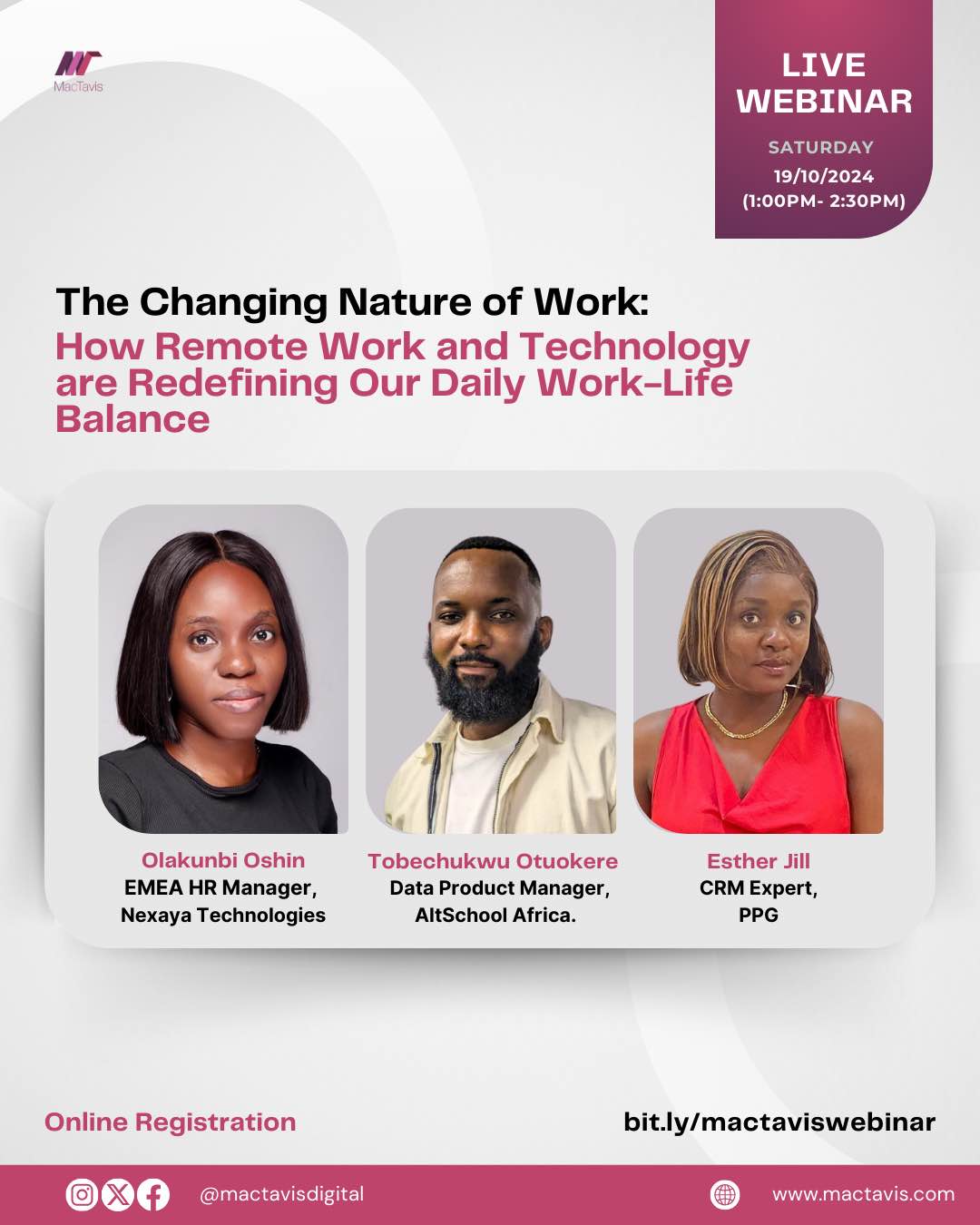
    On Saturday, we hosted a webinar titled “The Changing Nature of Work: How Remote Work & Tech Are Shaping Work-Life Balance”. The event brought together insightful discussions from industry leaders about the evolving workplace, how remote work reshapes traditional work structures, and the balance between professional and personal life. The conversation was filled with practical tips, real-world challenges, and solutions for work-life harmony in the digital age.

    Key Speakers & Takeaways

    1. Olakunbi Oshin – EMEA HR Manager at Nexaya Technologies

    Olakunbi Oshin opened the session by exploring the history of remote work. She pointed out that the concept dates back to 1973, long before the COVID-19 pandemic made it mainstream. She highlighted how the pandemic accelerated the adoption of remote work, creating new job roles such as remote team leaders and virtual assistants.

    However, not all industries, embraced remote work fully. Sectors like banking faced challenges due to the vast amount of sensitive information they handle and the lack of home-based technical infrastructure. Olakunbi also touched on other challenges, such as maintaining employee productivity, dealing with distractions at home, and finding ways to create personal connections with colleagues despite the distance.

    One of the most memorable quotes from her session was, “If everyone decides to work remotely all over the world, it will take the human factor out of work and turn us into machines.” She emphasized the importance of balancing remote work with physical interactions to maintain team dynamics and personal relationships.

    2. Tobechukwu Otuokere – Data Product Manager at AltSchool

    Tobechukwu shared his experiences working both remotely and in-office, expressing his preference for a hybrid work model. He delved into the privacy concerns that come with remote work and how difficult it can be to draw a clear line between work and personal life. One of his key suggestions for overcoming this challenge was to make work more about the outcomes rather than just tracking the number of hours worked.

    Tobechukwu also stressed the importance of effective communication, favoring calls over text-based communication to foster a more personal connection with colleagues. His practical productivity tips included waking up two hours before work to create a structured day, maintaining a to-do list, and prioritizing tasks. Additionally, he highlighted the importance of taking breaks to avoid burnout, an issue that is becoming more prevalent in a remote work setup. He also mentioned using techniques such as the Pomodoro technique to improve productivity.

    3. Esther Jill – CRM Expert at PPG

    As a strong advocate for remote work, Esther Jill provided a contrasting view to Tobechukwu, explaining why she prefers working 100% remotely. For her, the biggest advantage is the flexibility and visibility that remote work offers, allowing her to harmonize her professional and personal responsibilities more effectively.

    Esther also shared her personal experience of transitioning to remote work, which was initially challenging. She overcame these difficulties by creating a dedicated workspace and organizing her day with a to-do list. In her closing remarks, she emphasized the importance of mental health and self-care, stating that achieving work-life balance means harmonizing work with life rather than treating it as two competing forces.

    Audience Q&A Highlights

    The webinar concluded with a Q&A session, where participants raised important questions that reflected the challenges many face in navigating remote work. Key questions included:

    • How to set clear boundaries with employers regarding working outside of office hours?
    • How can managers effectively oversee remote employees given their different personalities and needs?
    • How to manage unavoidable distractions while working from home?

    The Lasting Impact of Remote Work

    The webinar lasted for 1 hour and 41 minutes, filled with in-depth discussions on the future of work. Each speaker brought their own experiences and insights, highlighting both the advantages and the challenges of remote work. From privacy concerns to the importance of physical interactions, this webinar really showed the ongoing evolution of work and its impact on work-life balance.

    As remote work becomes more entrenched in today’s workforce, the need for clear strategies to maintain productivity, personal connections, and mental health has never been more critical. The discussion left us with much to ponder, especially on how technology continues to redefine the way we work and live.

    This webinar was a call to action for organizations and individuals to rethink how they approach work in this new digital era. We thank everyone who participated and look forward to hosting more insightful conversations in future events.

    Missed the Webinar?

    If you couldn’t attend live, no worries! You can listen to the full recording of the webinar here.

    Share your thoughts!

    How are you adapting to remote work? What challenges have you faced in balancing your professional and personal life? Leave a comment below.

    Don’t Miss Our Future Events

    Mactavis Digital will be hosting insightful webinars like this every month so be sure to subscribe to our newsletter to stay updated on upcoming events.

  • Guide to Building a High Performing Real Estate Website

    Guide to Building a High Performing Real Estate Website

    Having a website for your real estate business is an absolute necessity. The real estate market has evolved, and so have your potential buyers. People no longer rely solely on in-person visits or brochures to make decisions; they head online, browsing properties and making inquiries from the comfort of their homes.

    But here’s the kicker: not just any website will do. It’s not enough to have a digital presence. Your real estate site needs to be well-designed and optimized to turn visitors into potential leads and ultimately, buyers. If your site lacks performance, you could be missing out on potential business.

    Your site needs to engage and capture potential clients through an easy-to-use, data-driven experience. In this guide, we’ll walk you through the essential strategies to turn your website into a lead-generating powerhouse.

    1. Understanding Your Target Audience

    Before you start working on your real estate website, it’s crucial to know who your potential buyers are. Your target audience drives every aspect of your website, from the content you create to the design choices you make. Without understanding their needs, preferences, and behaviors, your site might not connect well and struggle to convert visitors into buyers.

    Key Tips for Defining Your Audience:

    • Create Buyer Personas: Paint a detailed picture of your ideal buyers. Are they first-time homeowners? Luxury property investors? Develop profiles that highlight their demographics, income, location preferences, and pain points.
    • Define Useful Filters: Tailor the site experience by segmenting your audience based on property cost (luxury vs. budget), property type, location, and intent (rent vs. purchase). This helps create a personalized experience for every visitor.
    • SEO Insight: Do some keyword research to understand how your audience search online. This will help you match your content and meta tags to their search habits, boosting visibility and ranking. By understanding your audience, you can build a real estate website that provides a personal and relevant user experience, making it more likely to convert visitors into buyers.

    2. Designing a User-Friendly, Responsive Website

    When it comes to your website, design is everything. It’s the first thing people notice, and it can either draw them in or turn them away. A sleek, modern, and easy-to-navigate site not only leaves a great first impression but also keeps visitors interested long enough to become potential clients. A cluttered or slow real estate website means potential clients will click away in seconds.

    Key Tips for a User-friendly Website:

    • Prioritize Mobile Responsiveness: With most prospective homeowners and tenants using mobile devices to search for properties, your real estate website needs to work seamlessly on smaller screens. Ensure images, text, and buttons resize and function properly on all devices.
    • Speed and Navigation: Nothing frustrates users more than slow load times or confusing navigation. Ensure your site loads quickly and that visitors can easily find what they’re looking for with minimal clicks. A smooth, intuitive user experience will keep them on your site longer.
    • High-Quality Visuals and CTAs: Real estate is visual by nature, showcase your properties with top-notch images and videos. Clear, compelling calls-to-action (CTAs) on every page will guide visitors toward the next step—whether it’s scheduling a viewing, contacting an agent, or signing up for updates.

    3. Optimizing Property Listings for Search and Usability

    If you want to really grab the attention of potential buyers and renters, your property listings need to be more than just the basics. They should be carefully put together, visually appealing, and easy to use. Here’s how to make sure your property listings are both user-friendly and search-engine-optimized,

    Key Tips for Optimized Listings:

    •  Prioritize Detailed Descriptions: A detailed listing attracts serious inquiries. Make sure to include important details like price, location, property features, and amenities. But don’t stop there—make the description engaging by highlighting the property’s unique selling points, such as its proximity to important places or special design features.
    •  Make It Visually Stunning: Great visuals can make or break a potential buyer’s first impression. High-resolution images from different angles, along with well-lit interior shots, help prospective clients envision themselves in the space. Adding virtual tours gives visitors an immersive experience, letting them explore every nook and cranny without leaving their screens.
    • Integrate User-Friendly Search and Filter Tools: Make sure your listings have easy-to-use filters based on price range, property size, and features, so users can easily narrow down their searches. Also, integrating map functionality allows potential buyers to see the property’s proximity to schools, transportation links, and other essentials.

    4. Incorporating Lead Generation Tools and Features

    To turn visitors into valuable leads, your real estate website needs to do more than just showcase properties. It should actively engage users and guide them towards taking action. A well-designed site will seamlessly integrate lead-generation tools, turning curiosity into commitment.

    Key Tips to Drive Leads:

    • Strategically Use Forms, CTAs, and Pop-Ups: It is crucial to place these features strategically so they don’t overwhelm users. For instance, putting a CTA like “Get Instant Property Alerts” near the top of a listing can encourage potential buyers to subscribe for updates. Another great way to engage visitors is through live chat, which allows you to address any hesitations or questions they may have in real-time. When visitors feel supported, they’re more likely to provide their contact details.
    • Offer Value-Driven Incentives: Offering downloadable guides, market trend reports, or home-buying checklists in exchange for contact details creates a win-win scenario. These resources help users make informed decisions and position your brand as a trusted advisor in real estate. Remember, people are more willing to give when they receive something valuable in return.
    • Keep Potential Buyers Engaged with Calculators and Neighborhood Info: These features add depth to your site and help visitors envision life in a particular area or understand their financial options. When potential buyers can use your site to figure out mortgage rates or check out local schools, amenities, and commute times, they tend to stick around longer, giving you more chances to grab their attention.
    • Optimize CTAs for SEO and User Intent: Using phrases like “Explore Available Homes” or “Get Personalized Listings” resonates with what potential buyers are seeking. Also, make sure to use action-oriented keywords in your calls to action (CTAs) to boost your search visibility. This will help potential buyers who are ready to take the next step to easily find and follow the path you’ve set out for them.

    5. Analyzing and Refining Your Website’s Performance

    It’s important to keep in mind that your website should always be changing to meet the needs of the people who use it. To make sure your site not only brings in visitors but also turns them into leads, it’s crucial to regularly look at how it’s doing. Using data to make decisions is really important for making the user experience better and increasing the number of people who take action on your site.

    Key Tips for Improving Performance & Conversion:

    • Track User Behavior with Heatmaps and Analytics Tool: Understanding how visitors engage with your site is important for making meaningful improvements. Heatmaps show you exactly where users are clicking, scrolling, and spending the most time, giving you a visual picture of how users interact with your site. You can combine this with analytics tools like Google Analytics to dig deeper into metrics such as where your traffic is coming from, how long people are staying on your site, and which pages they’re leaving from. 
    • A/B Test CTAs, Forms, and Landing Pages: It’s always a good idea to try out different versions of your calls to action, forms, and landing pages to see which design or wording connects best with your audience. Even small changes, like tweaking button colors, updating headlines, or rearranging form fields, can make a big difference in increasing conversions.
    • Automate Reporting for Key Metrics: Set up automated reporting to keep an eye on important stats. Keep an eye on the bounce rate to see how engaged users are, and track lead generation to see how well your call-to-actions and forms are working. Also, make sure to monitor your site’s SEO performance by tracking keyword rankings and organic traffic. Automating these reports will help you stay on top of things and make smart decisions to keep your site running smoothly.

    Conclusion

    Your real estate website is your most valuable digital asset. When optimized for both user experience and conversion, it can transform into a lead-generation powerhouse. But waiting for competitors to gain the upper hand isn’t an option. The time to act is now.

    Investing in a website that not only looks stunning but also drives conversions will set you apart in a crowded market. From detailed property listings to smart lead-generation tools, every element should work together to turn casual visitors into committed buyers.

    At Mactavis Digital, we specialize in creating scalable, results-driven real estate websites designed to capture leads and maximize conversions. Our team of web design and development experts is ready to help you elevate your online presence and turn your website into a lead-generation powerhouse.

    Contact us today for a free consultation and discover how we can build a website tailored to your needs. Time is ticking, and every missed opportunity could mean a lost client. Let’s work together to ensure your website isn’t just another site.